About Elton University
Picking a university is a big commitment — of time, money, and trust. A new university asks even more of you. This page exists to answer the questions you should be asking: who founded Elton, who teaches here, what we believe, and why.
Our Name
Elton is an Old English name meaning "from the old town." That is exactly what we are.
The oldest universities in the world — Plato's Academy, Aristotle's Lyceum, the original Oxford and Cambridge — were not built around course catalogues, credits, and curricula designed by committee. They were built around direct relationships between teachers and students, around curiosity-driven inquiry, around learning that moved at the pace of the person doing the learning. In other words, they looked a lot like Elton.
Somewhere along the way, higher education lost that tradition. It traded the tutorial for the lecture hall, the individual for the cohort, the question for the credential. Elton is a return to what universities were always supposed to be — reimagined for the world as it is today.
New school. Old town.
Our Story
Higher education hasn't meaningfully changed in over a century. The lecture hall. The four-year timeline. The crushing debt. The degree that may or may not lead anywhere. Generations of students have accepted this as simply how college works.
We didn't accept it.
Elton was founded in 2021 by educator and researcher Adam Braus with one question at its center: what if we started from scratch and built a university based entirely on what the evidence actually says? Not on tradition, not on administrative convenience, not on the preferences of tenured faculty — but on the best scientific research into how human beings actually learn.
The answer looked nothing like what already existed. So we built it.
Our Mission
"Elton University's mission is to serve our students, the country, and the world by providing a high-quality, evidence-based higher education that cultivates the knowledge, skills, and attitudes that support free people living in a free society."
We hold ourselves to that mission with specific, measurable commitments: high student satisfaction, a strong rate of graduates achieving their next career or educational goal within six months, a high graduation rate, and a near-zero rate of students leaving unhappy. We track all of these, openly, because we believe a university that cannot measure its own success has no business claiming it.
Our Motto
Elton's motto is the Latin phrase Curiositate Humanitas which means "Humanity through curiosity" — or more precisely, "by following our deepest curiosities and highest motivations, we become more fully human."
Great universities have always expressed their commitments in their mottos. Harvard's is Veritas — truth. Yale's is Lux et Veritas — light and truth. Elton's says something different: not just what we seek, but how we seek it. And it shapes everything about how we teach. If wisdom comes through eager pursuit, then our job is to help each student discover what they are most eager about — provide the finest possible guidance for that journey.
By following your deepest curiosities, you do not just gain knowledge. You become more fully yourself, more fully free, and more fully human.
Elton's Leadership
Elton has a growing team of highly trained, experienced, and visionary leadership.
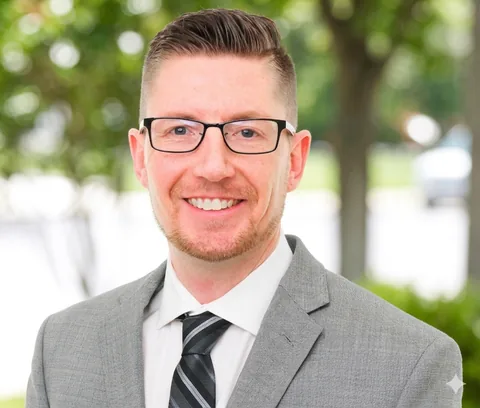
Colin Lumsden, PhD ('26), MSc
Previously: Springboard, 2U, Pearson
Colin Lumsden is a higher education and edtech executive with nearly 30 years of experience building programs and partnerships that deliver results for learners. He has been part of the management teams behind two of the four largest edtech acquisitions in history and led a portfolio generating over $110 million in annual revenue across more than 25 university partners. At Elton, he brings that academic commitment and executive experience to the College of Business.

Malgorzata Michalowska, PhD
Malgorzata Michalowska is a neuroscientist with research experience spanning preclinical and clinical science, driven by using knowledge to make a meaningful difference in people's lives. She speaks English, Polish, German, and Italian fluently. At Elton, she brings that cross-disciplinary curiosity to her work with students, from their first conversation with admissions through their studies.

Brandon Lee
Previously: Searchlight.ai, Orenda Academy, Genius of You
Brandon Lee is a founder, marketer, and educator who has started four ventures at the intersection of business and social impact. He was employee #1 at Searchlight.ai, where he built the Customer Success function before the company's exit, and cofounded Orenda Academy. He has been featured in TIME, the BBC, Inc., and TEDx. At Elton, he helps grow the university and teaches its students.
Our Advisors
Elton draws on advisors with deep, real-world expertise to keep our programs rigorous and current.
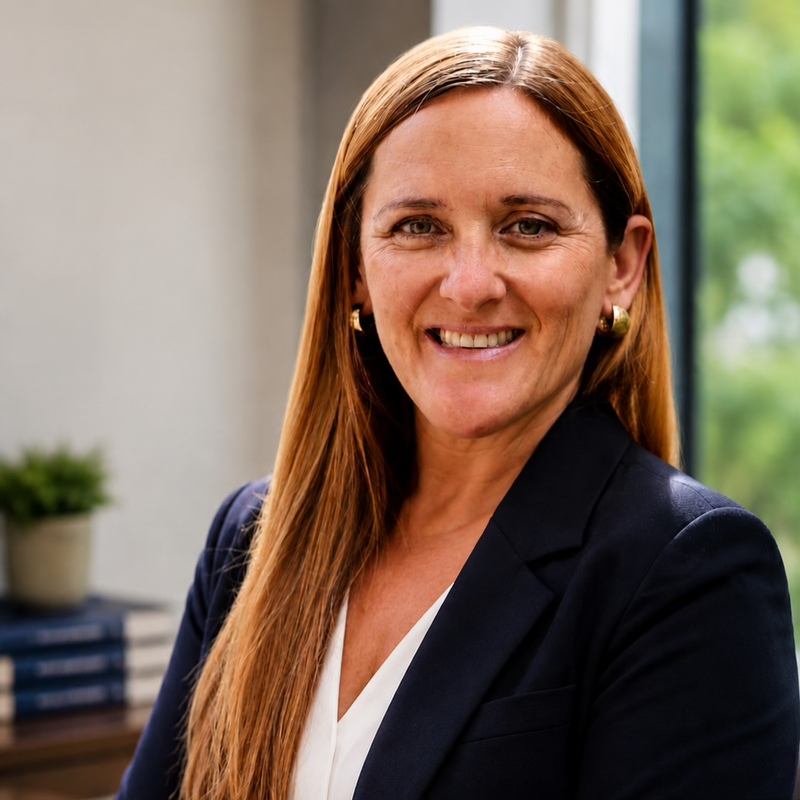
Justine Meyr, PhD
Coordinator of New Member Services, SACSCOC
Justine Meyr is a higher education leader in accreditation, faculty development, and AI strategy. At SACSCOC, she consults with colleges and universities on curriculum, learning outcomes, and assessment, and she previously directed training and curriculum development at the WASC Senior College and University Commission. She holds a PhD in Education from UC Santa Barbara. At Elton, she advises on accreditation readiness, curriculum, and evidence-based teaching.
Audrey Witters
Previously: Managing Director, Online & Entrepreneurship Programs, Stanford Graduate School of Business
Audrey Witters spent more than 22 years at the Stanford Graduate School of Business, where she designed, launched, and scaled Stanford LEAD, the school's flagship online executive program, to more than 1,000 global participants and over $20 million in annual revenue. She specializes in program formats that deliver community and deep learning at scale. At Elton, she advises on program design and strategy.
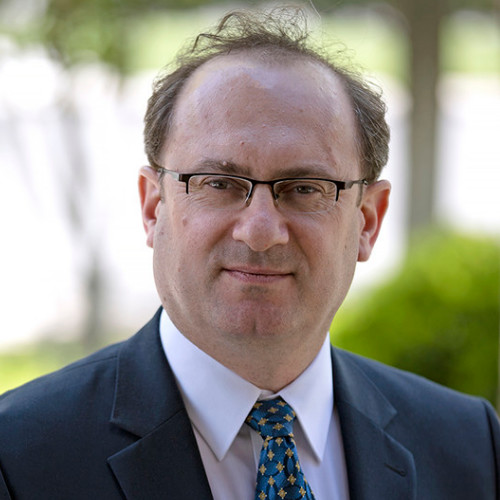
Tolgay Kizilelma, PhD
Director, M.S. in Cybersecurity & Associate Professor, Dominican University of California
Tolgay Kizilelma is a Certified CISO with nearly 30 years of experience, named one of the top 100 CISOs of 2022 by CISOs Connect. He has served as Chief Information Security Officer at Sutter Health and UC Merced and now directs the M.S. in Cybersecurity at Dominican University of California. At Elton, he advises on the rigor and real-world relevance of our cybersecurity curriculum.
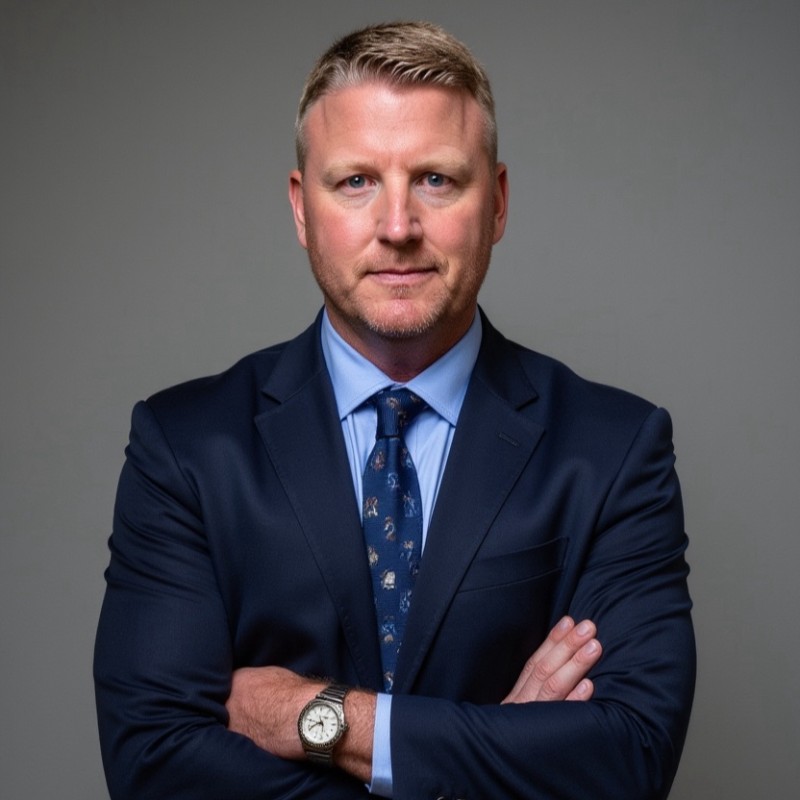
Bill Brosseau
Previously: Vemo Education, Ascent Funding, BloomTech, Blackboard, Sallie Mae
Bill Brosseau builds go-to-market systems at the intersection of education, finance, and technology, with roles at Sallie Mae, Blackboard, Vemo Education (which he co-founded), Ascent Funding, and BloomTech. At Ascent, he led a $100 million workforce development financing initiative with Social Finance and Google.org. At Elton, he advises on go-to-market strategy, enterprise sales, and revenue operations.
Elton and Evidence-Based Education
You would not go to a hospital where the staff told you they had never heard of evidence-based medicine or had heard of it but still preferred to rely on tradition and whatever happened to be fashionable this decade. And yet this is effectively the norm in higher education. Universities largely ignore decades of groundbreaking research into what works in teaching and learning.
Elton is based, from its founding moment to its present day, on using the best up-to-date evidence for what works in education. Every decision we make about how students learn — how we teach, how we assess, how we support — is grounded in the best research we can find. When better evidence emerges, we change. "As far as we know, Elton is the only explicitly and publicly evidence-based university in the world." We hope others soon follow suit!
Universities teach the way they teach because that is how they have always taught — lectures that research shows are among the least effective ways to learn, rigid curricula that ignore decades of study on motivation and retention, assessment methods designed for administrative convenience rather than student growth.
Elton instead follows what the best evidence shows. And as the evidence evolves, so will Elton.
Here are some of the evidence-based educational methods Elton uses today:
1-on-1 Tutoring
"Research by educational psychologist Benjamin Bloom found that students who learn through 1-on-1 tutoring perform two full standard deviations above students in a traditional classroom" — meaning a student at the 50th percentile in a lecture hall performs at the 98th percentile when taught one-on-one. Every Elton student works directly with an expert professor, not a teaching assistant or a recorded video.
Growth Mindset Feedback
Elton professors are trained to give growth mindset feedback — responding to student work in ways that emphasize effort, strategy, and progress rather than fixed ability. Research shows this approach helps students learn as much as 60% more effectively than traditional evaluative feedback.
Active Learning
Elton students do not sit and absorb — they make things, solve problems, and apply what they are learning to real projects from day one. Decades of research confirm that active learning produces significantly better retention and deeper understanding than passive instruction.
Agile, Personalized Learning
"Students who study what they are genuinely curious about learn nearly twice as fast as students working through a compulsory curriculum." At Elton, every student builds a learning plan around their own goals, interests, and pace — not a syllabus designed for the average student.
Rubric-Based Grading
Rather than points-based or percentage grading, Elton uses clear, transparent rubrics for grading. Evidence shows that rubric-based grading is more accurate, fairer, and—critically—motivates students to engage more deeply with their work because they understand exactly what excellence looks like before they begin.
Specific Goals and Plentiful Feedback
Research consistently shows that students learn faster and more deeply when they have clear, specific goals and receive frequent, detailed feedback on their progress. At Elton, every sprint begins with explicit learning goals and ends with substantive feedback — so students always know where they are, where they are going, and how to get there.
And many more...
What We Actually Believe — And Why

A Great Way to Learn was Hiding in Plain Sight
"In the 1980s, educational psychologist Benjamin Bloom discovered that students who learn through 1-on-1 tutoring perform in the 98th percentile compared to the 50th percentile of classroom learners" — two full standard deviations of difference, every time. Universities have known this for forty years and haven't acted on it, because lecture halls are cheaper to run than actually teaching people. Every Elton student works directly with an expert professor — not a teaching assistant, not a recorded video — at a price lower than most public universities.
Request More Information
Learn What Matters to You
"Students who study what they are genuinely curious about learn nearly twice as effectively as students grinding through a required curriculum" — and this is not a radical idea, it is well-documented research. At Elton, you don't spend two years checking boxes before you get to the interesting part. From day one, you work with your professor and coach to build a learning plan around your actual goals — the career you want, the problems you want to solve, the person you want to become.
Request More Information
Choosing What to Learn is Important
There is a skill that traditional universities never teach because they never give students the chance to practice it: the ability to set your own direction. At Elton, that capacity is built from day one. Students who graduate don't just have credentials — they have the self-knowledge and agency to keep learning for the rest of their lives, which in a world that changes as fast as this one may be the most valuable thing a university can give you.
Request More Information

