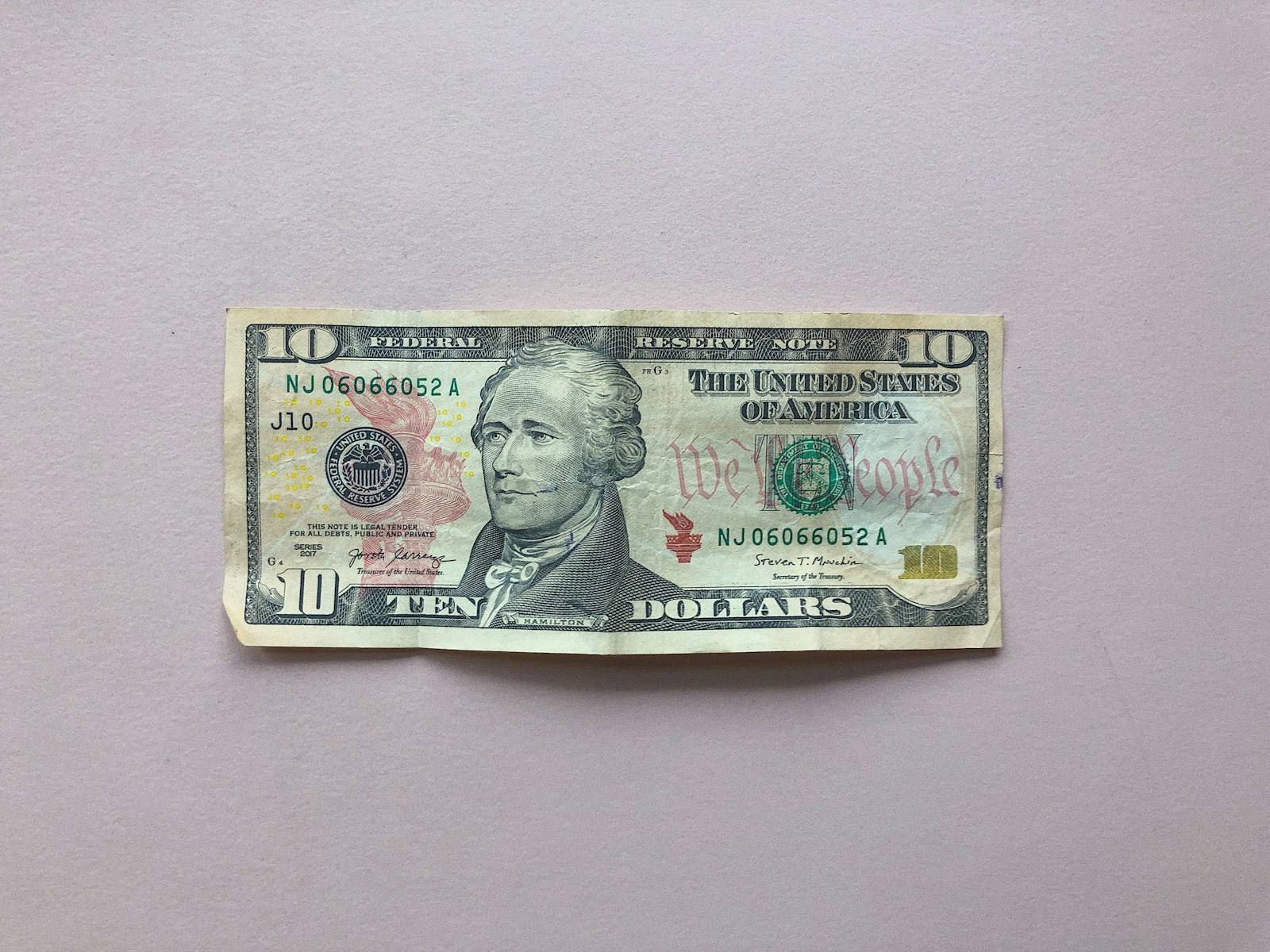
Long before anyone called it "industrial policy," the United States ran one. It had a name, a political party, a champion in the Senate, and an intellectual founder on the ten-dollar bill. It was called the American System, and it shaped how a farming republic became the world's largest industrial economy.
Here's where the American System came from, what it actually did, and what its story teaches anyone working on industrial policy today.
Hamilton's Report on Manufactures (1791)
On December 5, 1791, Treasury Secretary Alexander Hamilton sent Congress his Report on the Subject of Manufactures. Most Americans then farmed, and many leaders, including Thomas Jefferson, wanted to keep it that way. Hamilton argued that a nation without its own manufacturing would stay poorer, more dependent on Britain, and less secure in war.
His central insight still anchors the economics of industrial policy. New industries don't fail because they can never succeed. They fail because established foreign rivals got there first. Hamilton put it this way: "The superiority antecedently enjoyed by nations who have preoccupied and perfected a branch of industry" is a more formidable obstacle than any other to starting that industry at home. He also pointed to "the strong influence of habit and the spirit of imitation": investors and workers stick with what they know.
This is the infant industry argument: a young industry may become fully competitive once it grows and learns, but it needs temporary help to survive long enough to get there.
Hamilton's toolkit went well beyond tariffs. He proposed:
- Protective duties on competing imports
- "Pecuniary bounties", or direct subsidies, which he called "one of the most efficacious means of encouraging manufactures, and … in some views the best"
- Premiums for quality and innovation
- Duty exemptions on raw materials that manufacturers needed
- Encouragement of inventions and skilled immigration
- Better roads and canals to connect markets
Congress adopted little of the report at the time. But it became the blueprint for the next century of American economic policy.
Henry Clay names the American System
The War of 1812 proved Hamilton's point. Cut off from British goods, Americans scrambled to make their own, and new mills sprang up across New England. When peace brought a flood of cheap British imports, those young firms faced ruin. Congress responded with the Tariff of 1816, the first tariff designed mainly to protect American industry rather than raise revenue.
Kentucky's Henry Clay turned these scattered measures into a national program and gave it a name: the American System. It rested on three pillars:
- A protective tariff to shelter manufacturing and give it a secure home market
- A national bank, the Second Bank of the United States, chartered in 1816, to provide a stable currency and credit
- Internal improvements, federally supported roads and canals that linked Western farms to Eastern factories
The design was a political bargain as much as an economic plan. Tariffs helped Northern manufacturers, tariff revenue and land sales would pay for roads and canals that helped Western farmers, and a growing industrial workforce would buy those farmers' crops. Every region would gain from a more connected, self-reliant national economy.
Clay made his fullest case in a three-day Senate speech in February 1832, In Defense of the American System, describing a government-sponsored effort to balance the nation's agriculture and manufacturing.
The fights over the American System
The American System never ran smoothly. Southern planters exported cotton and imported manufactured goods, so tariffs raised their costs. South Carolina's anger over the 1828 "Tariff of Abominations" led to the Nullification Crisis of 1832–33. President Andrew Jackson vetoed federal funding for Kentucky's Maysville Road in 1830 on constitutional grounds and vetoed the recharter of the Second Bank in 1832.
The Whig Party carried Clay's program through the 1830s and 1840s, and one young Illinois Whig absorbed it completely. Abraham Lincoln called Clay his "beau ideal of a statesman." As president, Lincoln and the Republican Congress enacted much of the Whig agenda: the Morrill Tariff, the Pacific Railway Act, and land-grant colleges. For the rest of the 19th century, the United States kept some of the highest tariffs among the major economies while it built railroads, steel mills, and a vast domestic market.
Friedrich List carries the idea abroad
The German economist Friedrich List lived in the United States in the 1820s and studied Hamilton's work closely. His 1841 book The National System of Political Economy turned the American experience into a general theory: comparative advantage is not fixed, and a nation can build the industrial capabilities it lacks with temporary protection. Germany, and later Japan and South Korea, followed versions of List's playbook.
Economist Ha-Joon Chang revived this history in Kicking Away the Ladder (2002), arguing that today's rich countries climbed to prosperity using the very policies they now discourage poorer nations from using. Critics such as trade historian Douglas Irwin dispute how much of America's growth protection actually caused, and that debate is very much alive. (For more on Chang and his school of thought, see What Is Heterodox Economics?)
Did the American System work?
Historians and economists still argue about it, and the honest answer has several parts:
- The infrastructure clearly mattered. Roads, canals, and later railroads knit together a continental market and drove a transportation revolution.
- Some protection helped young industries. Modern research supports the core mechanism. Réka Juhász found that French regions temporarily shielded from British trade during the Napoleonic Wars adopted mechanized cotton spinning faster and stayed ahead for decades, the same kind of competition that early American mills faced.
- Tariffs carried real costs. They raised prices for consumers and for export-dependent regions, and they deepened sectional conflict.
- Tariffs alone don't explain American growth. Abundant land, immigration, a huge internal free-trade zone, and strong institutions all played big roles.
The best lesson from the American System may be its breadth. Hamilton and Clay never relied on a single tool. They combined trade policy, finance, infrastructure, and innovation into one strategy, which is exactly what researchers today find in the industrial policies that work best.
Study America's industrial policy tradition
The American System is the opening chapter of a story that runs through the CHIPS Act and today's debates over protectionism vs. free trade. In Elton's Industrial Policy Executive Certificate, you study that story with Ian Fletcher, coauthor of Industrial Policy for the United States (Cambridge University Press, 2024), through recorded lectures and one-on-one tutorials built around your own work.
Go deeper
- What Is Industrial Policy? Definition, Examples, and What the Evidence Says
- Protectionism vs. Free Trade: Definition, Arguments, and Evidence
Curious how Hamilton's ideas apply to today's policy fights? Explore the Industrial Policy Executive Certificate or schedule a free info session. You can start any week.
Sources
- Hamilton, A. (1791). Report on the Subject of Manufactures. Founders Online, National Archives.
- Clay, H. (1832). In Defense of the American System. U.S. Senate, February 2, 3, and 6, 1832.
- List, F. (1841). The National System of Political Economy.
- Chang, H.-J. (2002). Kicking Away the Ladder: Development Strategy in Historical Perspective. Anthem Press.
- Juhász, R. (2018). Temporary protection and technology adoption: Evidence from the Napoleonic blockade. American Economic Review, 108(11), 3339–3376.