Production-Side Economics: How Nations Build Productive Power
Manufacturing, technology, and capabilities: how firms and nations build productive power, and how industrial policy, trade policy, and public investment shape it. Study it 1-on-1 with expert professors.
Production-Side Economics & Industrial Policy is one of the focuses you can choose in Elton's Heterodox Economics graduate certificate and master's concentration. Study it in depth, compare it with other traditions, or build your own synthesis, guided by professors who know each school well.
Start Immediately. $18,000 Total Tuition. Graduate Certificate Option.
- 1-on-1 Expert Professors
- Study Any School Side by Side
- 100% Remote & Flexible
- Keep Your Job
What Is Production-Side Economics?
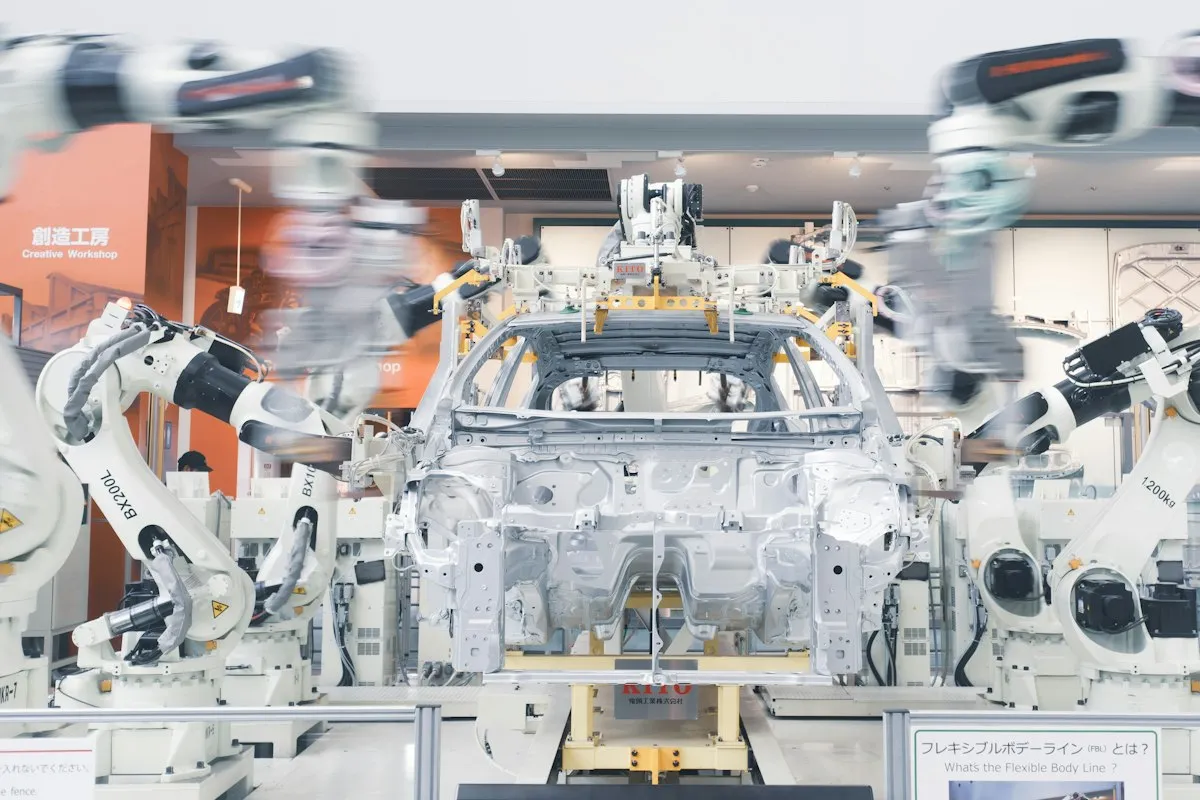
Many economics courses start with consumers and prices. Production-side economics starts with factories, firms, technology, and skills. It asks how nations learn to make complex things, why some regions thrive while others hollow out, and what governments can do about it.
The tradition runs from Alexander Hamilton's Report on Manufactures and Friedrich List's National System of Political Economy to Albert Hirschman's linkages, Alice Amsden's study of South Korea, and today's work by Ha-Joon Chang, Mariana Mazzucato, Dani Rodrik, and Ricardo Hausmann. With the CHIPS Act and the Inflation Reduction Act, industrial policy is back at the center of US policy.
You will study the history and theory, learn the tools for analyzing industries and capabilities, and weigh the evidence on when industrial policy works and when it fails. For a short, intensive option, Elton also offers an executive certificate in industrial policy.
Learn How Things Actually Get Made
These are the kinds of questions you can explore with your professors:
- How did South Korea, Taiwan, and China industrialize so quickly?
- Should the United States bring semiconductor and battery manufacturing home?
- Why do some regions lose their industries, and can they win them back?
- When does government support for an industry pay off, and when is it wasted?
Key Thinkers You Will Read
You read the classic texts alongside today's research, so you understand not just what these economists argued but why.
Alexander Hamilton
The Report on Manufactures and America's first industrial policy.
Friedrich List
Infant industries and the national system of political economy.
Albert Hirschman
Unbalanced growth and backward and forward linkages.
Alice Amsden
Asia's Next Giant: South Korea and late industrialization.
Ha-Joon Chang
Kicking Away the Ladder: how rich countries really got rich.
Mariana Mazzucato
The entrepreneurial state and mission-oriented policy.
Core Ideas
Capabilities & Complexity
Why what a country makes matters, and how economic complexity predicts growth.
The Developmental State
How Japan, South Korea, Taiwan, and China used state guidance to industrialize.
Infant Industries & Trade
Tariffs, export discipline, and the debate over protection and free trade.
Innovation & the State
Public research, DARPA, and the role of government in creating new technologies.
Manufacturing & Regions
Deindustrialization, supply chains, and how places build and lose productive power.
Policy Design
Subsidies, procurement, and conditions: how to make industrial policy work and avoid capture.
Debates and Critiques
Critics warn that governments are poor at "picking winners," that subsidies invite lobbying and waste, and that import-substitution in Latin America and elsewhere often disappointed. Supporters point to East Asia and to the public origins of many key technologies. You will study the successes and failures side by side and learn what the recent evidence shows.
Elton's program is pluralist: your professors help you understand each school on its own terms, weigh it fairly against the evidence, and reach your own conclusions.
Learn 1-on-1 With Expert Professors
Map Your Interests
With your advisor, build a learning plan around Production-Side Economics and the fields and questions you care about most.
Meet Your Professors
Meet each week in tutorials of one to three students. Read, discuss, and get feedback on your work from economists who know the tradition well.
Build Real Work
Write policy briefs, build models, analyze data, and research the questions that matter to you, with your professors guiding every step.
Graduate With a Portfolio
Leave with research papers, analyses, and policy proposals that show how you think, ready to share with employers or journals.
Eligibility
To enroll in a master's program or graduate certificate, you need one of the following:
- A bachelor's degree, or
- Some college and 5 years of relevant work experience, or
- Proof of your ability to engage in master's-level study.
No standardized tests are required: no GRE, no GMAT.
Same Tuition as the Economics Program: $18,000
Production-Side Economics & Industrial Policy is a focus within Elton's economics graduate certificate and master's concentration, so it shares the same tuition, financial aid, and timeline: $18,000 total, with a 10% discount if you pay in full upon enrollment. The graduate certificate on its own is $8,000.
- Start Immediately - Other programs require you wait until September or January to start. With Elton you can start immediately.
- No Risk First Month - If during the first month you or Elton decide that you are not a fit for the university, you will receive a full refund.
- Stacking Credentials - If you stop the program early, you still earn your graduate certificate in economics if you have completed 1/3 of the program.
Frequently Asked Questions About Production-Side Economics
What is production-side economics?
How is this different from the industrial policy executive certificate?
Is Production-Side Economics a separate degree?
Can I study other schools of thought too?
Other Schools of Economic Thought
- Institutional Economics
- Post-Keynesian Economics
- Modern Monetary Theory
- Ecological Economics
- Austrian Economics
- Marxian Economics
- Feminist Economics
- Sraffian Economics
- Social Economics
- Georgist Economics
- Socialist & Collective Production
- History of Economics
New to the field? Start with our beginner's guide to heterodox economics.


